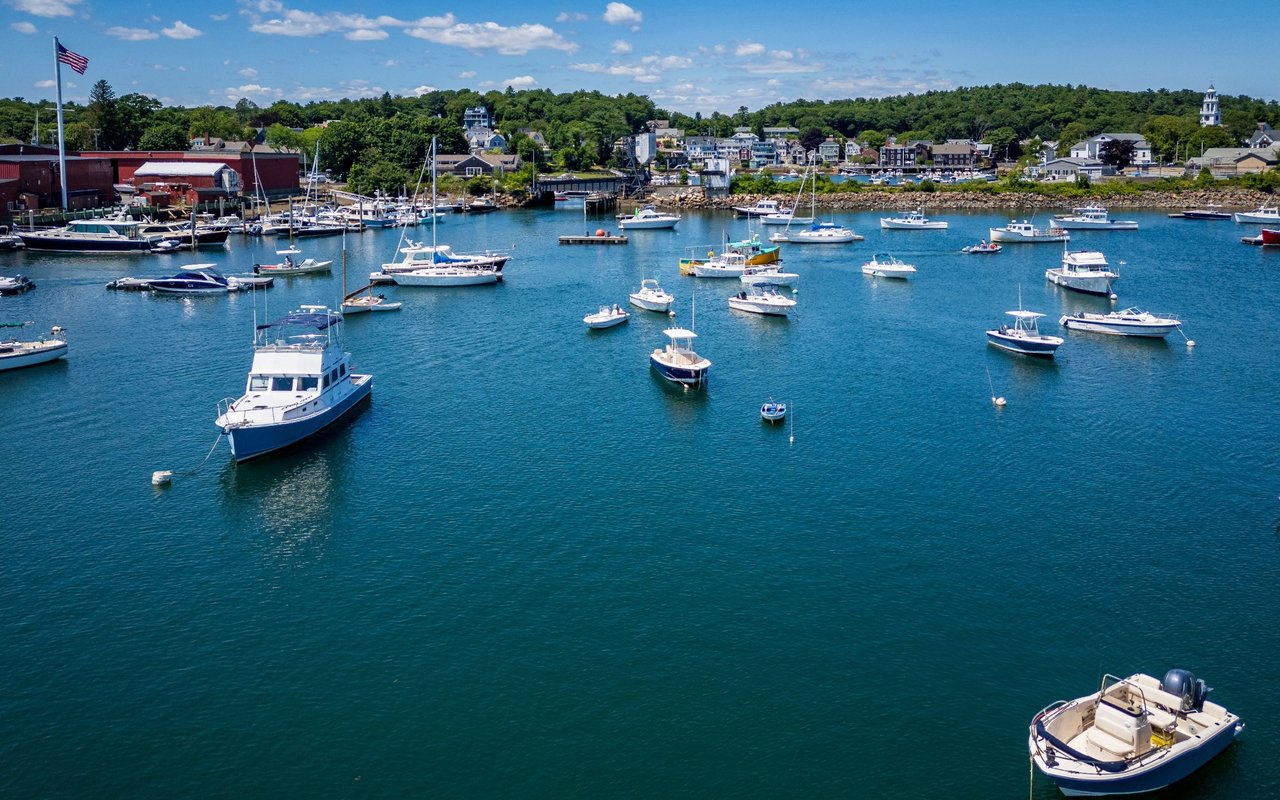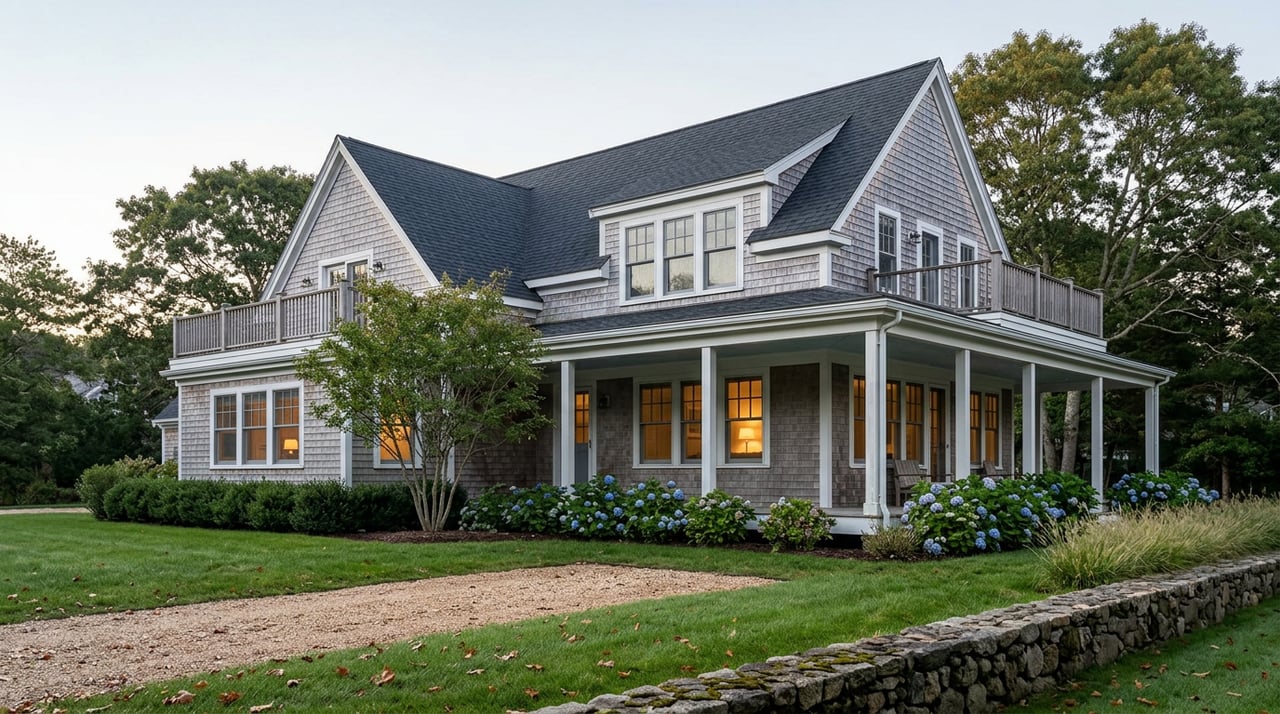
"It's interesting that it wasn't on the Neck," Linda Hayes, the listing agent on Marblehead's new record-setting sale, told the Marblehead Current earlier this month. She was talking about 10 West Orchard St, a waterfront estate that closed for $8.9 million in September 2026, the highest price ever paid for a home in town. Her surprise is worth sitting with, because it points to something buyers researching Marblehead right now keep missing: this town does not have one housing market with one number attached to it. It has several, and they rarely move together.
If you have been comparing Marblehead to Swampscott or Salem using whatever median price your search turned up, you have probably already noticed the numbers don't agree with each other. That is not a data error. It is the story.
The Sale That Broke the Record
10 West Orchard St sits on more than an acre with roughly 9,000 square feet of living space, five bedrooms, seven baths, and direct harbor views toward the lighthouse. Built in 2011 and designed by SV Design with construction by Essex Builders, the home went under agreement in six days. The previous record, $8.5 million for 102 Harbor Ave, had stood since October 2021.
What makes the sale notable beyond the price tag is where it happened. Hayes pointed out that prices like this are more typical of Beverly Farms or Manchester than Marblehead, and that this particular estate wasn't even on Marblehead Neck, the peninsula most buyers assume commands the top of the market. Two more listings on Crowninshield Road, priced at $15 million and $21 million, are currently on the market and could reset the record again before the year is out.
That is three eight-figure or near-eight-figure transactions moving through a single small town in the same stretch of months. In a market this size, that is not a trend. It is a handful of outliers doing the kind of work that skews everything downstream of them.
The Number That Doesn't Match It
Here is where it gets confusing if you're pricing out a move. Depending on which source you pull, Marblehead's home values are telling three different stories right now.
| Metric | Window | Figure |
|---|---|---|
| Median sale price | 3 months ending July 2026 | $1.1M, up 14.6% year over year |
| Median price per square foot | Same window | $467, down 1.5% year over year |
| Homes sold | July 2026 | 87, up from 78 the prior July |
| Average days on market | July 2026 | 21 days, up slightly from 19 |
A median sale price up nearly 15 percent while the price per square foot is actually down should not both be true in a normal market. In Marblehead right now, they both are, and the record sale is a big part of why.
When a town sells 80 to 90 homes in a month and one or two of them clear $8 million or more, those sales pull the median upward without telling you anything about what a typical three-bedroom colonial actually costs per square foot. The average buyer isn't paying more for space. The mix of what's selling has shifted toward the top, and the median follows the mix, not the market.
Why One Sale Can Move a Whole Town's Median
This is the part most portal-based research skips entirely, and it matters more here than in a town with deeper inventory.
Look at what happened in the Marblehead Historic District specifically. Over the three months ending March 2026, the median sale price there dropped 50.4 percent compared to the same period a year earlier. That is not a neighborhood in freefall. It's a neighborhood where only seven homes sold in that window. When your sample size is seven, one $2 million sale swapped for one $900,000 sale can swing the median by half. That's not market weakness. That's arithmetic doing what arithmetic does with small numbers.
The same math cuts both directions. As of spring 2026, there were only 22 waterfront listings across the entire town, at a median list price of $1.11 million. Nine miles of coastline, and fewer than two dozen homes for sale on it at any given moment. Three closings in a single quarter, especially if one of them is an $8.9 million estate, can move the per-square-foot number more than three months of ordinary single-family activity would.
This is the mechanism behind the contradictory table above. Marblehead isn't lying to you with its stats. It's a thin, lumpy market where averages get bullied by whichever handful of sales happened to close that quarter.
Marblehead Isn't One Market. It's Five.
If the town median is unreliable as a budgeting tool, the more useful frame is geographic. Marblehead breaks into distinct pockets, each with its own supply, its own buyer pool, and its own pricing logic.
- Old Town — walkable, historic, densely built streets near the harbor, with the least amenity-driven amenities day to day since most practical errands happen along Pleasant Street and Atlantic Avenue instead.
- Marblehead Neck — a causeway-connected peninsula with the town's largest estates and three of its yacht clubs, including the Corinthian. A meaningful share of homes here function as seasonal second properties, which means listings appear less often and negotiations move at a different pace than the rest of town.
- Clifton — including the Devereux and Preston Beach sub-areas along the Swampscott border, generally offering more house per dollar than Old Town or the Neck, with a mix of early-1900s cottages and later construction. Inventory here turns over rarely, and when it does, homes move quickly.
- Peach's Point — a private road and association on the north side of town with oceanfront frontage toward Crowninshield Island and Marblehead Lighthouse. When something here comes to market, it often sets its own comparable, because there's nothing else quite like it inside town lines.
- Shipyard District — harbor-adjacent, scarce in its own way, trading on direct water access rather than acreage.
A buyer with $1.1 million to spend in Old Town and a buyer with $1.1 million to spend on the Neck are not shopping for the same home. They're not even close.
What This Actually Means If You're Comparing Towns
If you're weighing Marblehead against Swampscott, Salem, or Beverly, the town-wide median is a reasonable sanity check for what Marblehead is worth in aggregate. It is a poor tool for setting your own budget, because the village you're buying into determines the real number far more than the town average does.
There's also a structural reason Marblehead trades where it does relative to towns with direct commuter rail access. Marblehead has no in-town train stop. Buyers who need a five-day-a-week commute into Boston tend to self-select into Swampscott, Salem, or Beverly instead, which compresses Marblehead's buyer pool relative to its waterfront and its housing stock. That's part of why the town's median sits below what its amenities alone might suggest, and it's a factor worth weighing if your own commute is part of the decision.
For sellers, the takeaway runs the other direction. If your home sits in a village with thin inventory, comparable sales from a different part of town may not be a fair comp at all. Pricing a Clifton colonial off a Marblehead Neck estate, or an Old Town cottage off a Peach's Point waterfront sale, will produce a number that doesn't hold up once buyers start touring.
A Few Questions Worth Asking Before You Commit to a Number
Is Marblehead's median price actually up 14 percent this year? The town-wide figure is, over the three months ending July 2026. But that increase reflects a shift toward higher-priced sales in the mix, not a 14 percent jump in what a comparable home costs. The price per square foot over the same window was down slightly, which is the more reliable signal for typical buyers.
Why did one neighborhood's median drop by half? The Historic District saw only seven sales in its most recent three-month window. With a sample that small, one or two unusually priced transactions can swing the median dramatically without reflecting any real shift in demand or value.
Does the record sale mean waterfront prices are rising across the board? Not necessarily. It means the top of the market had an unusually active stretch. With only 22 waterfront listings townwide as of spring 2026, a handful of high-end closings can move the aggregate numbers without changing what the next waterfront listing actually sells for. Each waterfront sale in Marblehead tends to set its own comp rather than confirm a broader trend.
If you're trying to figure out what a specific Marblehead street or village actually supports right now, rather than what the town-wide average suggests, that's exactly the kind of question worth a direct conversation instead of another portal search. North Shore and More works Marblehead block by block, not just town-wide, and can walk you through what your budget actually buys once you know which of the five markets you're really shopping in. Get a Free North Shore Market Consultation to get specific.