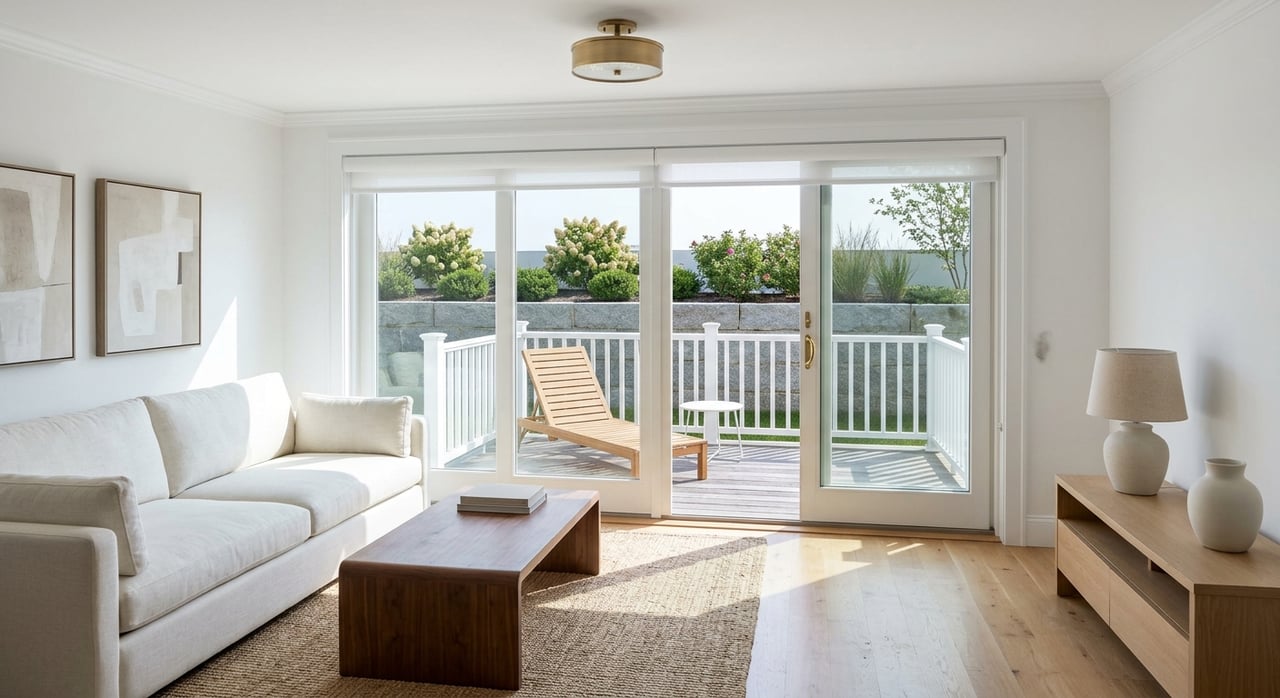
Selling a home in Swampscott is not just about showing square footage. You are also selling a lifestyle shaped by the coast, outdoor living, and access to Boston. If you want buyers to feel that value the moment they see your listing, smart staging can help. Let’s dive in.
Why Swampscott staging should feel local
Swampscott sits on the Atlantic Coast in Essex County, about 12 miles from Boston, and the town identifies MBTA rail and bus service along with several public beaches, including Eisman’s, Fisherman’s, King’s, Phillips’, Preston, and Whales. That local mix matters when you prepare your home for market. Buyers are often looking for a property that feels both coastal and commuter-friendly.
That does not mean turning your house into a themed beach cottage. It means presenting spaces in a way that feels bright, calm, functional, and easy to live in. In a town like Swampscott, staging should help buyers picture morning coffee on the porch, an easy trip to the station, and simple outdoor enjoyment near the water.
The local market also gives you a reason to focus on first impressions. In the Massachusetts Association of REALTORS® February 2026 update for Swampscott single-family homes, there were 10 homes for sale, 1.1 months of supply, a median sales price of $885,000, cumulative days on market of 65, and sellers received 96.6% of original list price on average. MAR also notes that one-month local activity can look extreme because the sample size is small, but the snapshot still points to a market where polished presentation can matter.
Stage the rooms buyers notice most
If you are deciding where to spend time and money, start with the spaces buyers care about first. According to the 2025 NAR Profile of Home Staging, buyers’ agents said the most important rooms to stage were the living room, primary bedroom, and kitchen.
Those rooms do a lot of emotional work in a showing. The living room helps buyers imagine daily life, the primary bedroom signals comfort, and the kitchen often shapes the overall sense of quality and upkeep. If these spaces feel open, fresh, and cohesive, your whole home tends to show better.
Focus on the living room
Your living room should feel airy and easy to use. Remove extra furniture, open up walking paths, and keep the layout simple enough that buyers can see the room’s size without distraction.
For Swampscott, a light neutral palette works well. Soft whites, sandy beige, pale gray, and muted blue accents can nod to the coastal setting without feeling forced. NAR also recommends neutrals because they help buyers picture the home as their own.
Refresh the primary bedroom
The primary bedroom should read as restful and uncluttered. Clear off dressers, reduce personal photos, and use simple bedding in light, clean tones.
If the room is tight, pull out one or two unnecessary pieces of furniture. A cleaner layout makes the space feel larger and calmer. Buyers do not need to see how much furniture fits. They need to see how comfortably the room lives.
Simplify the kitchen
Kitchens usually benefit from editing, not overdecorating. Clear counters, store small appliances, and leave only a few intentional items out, like a bowl of fruit or a neat tray.
Touch up paint, tighten loose hardware, and make sure every light works. NAR notes that decluttering, whole-home cleaning, and minor repairs are among the most common recommendations from agents. In many homes, these basic steps do more for the kitchen than expensive updates right before listing.
Do not overlook outdoor space
In Swampscott, outdoor space deserves real staging attention. NAR found that outdoor and yard space is one of the most commonly staged areas, and that makes sense here because the town’s coastal setting gives decks, porches, patios, and yards added lifestyle appeal.
You want buyers to see your exterior spaces as an extension of the home. Even a small porch or compact backyard can feel valuable when it looks usable, clean, and inviting.
Make curb appeal crisp
Curb appeal shapes the showing before buyers even walk in. NAR reports that improving curb appeal is one of the most common seller recommendations, along with cleaning and decluttering.
Start with basics:
- Mow and edge the lawn
- Trim shrubs and remove dead plantings
- Sweep walkways and steps
- Clean the front door and entry glass
- Add a fresh doormat if needed
- Touch up chipped paint where it is visible
These changes are usually low cost, but they can make your home feel better cared for.
Set up outdoor living zones
If you have a deck, patio, or porch, give it a purpose. A small table and two chairs, a tidy seating area, or a simple bench can help buyers understand how the space works.
Keep the look clean and weather-aware. You are aiming for a breezy North Shore feel, not clutter. A few neutral cushions or planters are enough.
Add a flexible work-from-home space
Swampscott’s location about 12 miles from Boston, plus local commuter rail access, makes flexibility a strong selling point. Some buyers may commute regularly, while others may split time between home and office. A room that clearly functions as a home office can help your listing connect with both.
NAR found that home office space is among the commonly staged areas. If you have a spare bedroom corner, finished landing, or den, show it as a usable workspace with a desk, chair, and clean background.
This does two things at once. It helps buyers imagine practical daily living, and it shows that your home can support more than one routine. That kind of versatility is valuable.
Start with the highest-impact basics
Not every seller needs full-service staging. NAR’s survey shows there is no single approach. Some agents stage every home, some only stage difficult homes, and many focus first on decluttering or fixing property faults.
If you want the biggest return on effort, begin with a budget-first sequence:
- Deep clean the entire home
- Declutter every room
- Depersonalize shelves, walls, and counters
- Touch up paint and complete minor repairs
- Improve curb appeal
That order reflects the most common improvements agents recommend. Before you spend on rented furniture or styling accessories, make sure the home already feels clean, open, and move-in ready.
Use coastal style carefully
For this blog title, the goal is coastal lifestyle buyers, but that does not mean heavy nautical decor. Buyers usually respond better to subtle cues than to obvious themes.
A better approach is to use staging choices that feel fresh and local:
- Light, neutral wall colors
- Clean-lined furniture with good spacing
- Natural textures like wood, linen, cotton, or woven accents
- Minimal accessories
- Plenty of natural light
This creates a coastal-New England feeling while still staying broad enough for many buyers. NAR also notes that versatile spaces and neutrals help buyers visualize the home as theirs.
Photos and video are part of staging
Staging does not stop when the room looks good in person. It also needs to work on camera. Buyers often narrow down choices online first, and NAR reports that photos, videos, physical staging, and virtual tours are all important to clients.
Among buyers’ agents, 31% said staging made buyers more willing to walk through a home they saw online. That is a useful reminder that your first showing often happens on a phone screen.
Prep for the camera, not just the open house
A room that feels fine in daily life can still photograph poorly. Cords, extra chairs, bulky rugs, overloaded counters, and dark corners all look bigger in listing photos.
Before photography day, check each room as if you are seeing it for the first time. Open blinds, turn on lamps, hide trash bins, straighten bedding, and clear visual clutter. A simpler room usually photographs as a larger and brighter room.
Empty rooms may need extra help
If your home is vacant, buyers can struggle to judge scale and use. NAR notes that virtual staging can help with empty rooms or hard-to-style spaces, though traditional photos, physical staging, videos, and virtual tours are still often rated above it.
That means virtual staging can be useful, but it should support the listing rather than replace thoughtful preparation. If buyers visit in person after seeing strong images online, the actual home still needs to deliver the same clean, inviting impression.
Should you hire a professional stager?
It depends on your home, timeline, and budget. NAR found that when a staging service is used, the median spend was $1,500, compared with $500 when the seller’s agent personally staged the home. The most important factors in choosing a staging company were design quality and price, and agents typically got two bids.
For many Swampscott sellers, the best first move is to handle the fundamentals before deciding on full-service staging. If your home already has good furniture, natural light, and a clean layout, you may only need guidance on editing and presentation.
If the home is vacant, heavily personalized, or has an awkward layout, professional staging may make more sense. The key is to match the level of staging to the home’s needs instead of assuming every listing needs the same treatment.
What staging can realistically do
Staging is best viewed as a presentation tool, not a guarantee. In NAR’s survey, 17% of buyers’ agents and 19% of sellers’ agents said staging increased the dollar value offered by 1% to 5%, while 30% of sellers’ agents reported slight decreases in time on market.
Those results are survey-based, so they are better read as directional than certain. Still, the practical lesson is simple. When buyers can picture themselves living in your home, they are more likely to engage with the listing and feel confident during a showing.
In Swampscott, that means leaning into what local buyers may already value: light-filled interiors, usable outdoor space, a calm coastal feel, and a setup that supports life near Boston. When your home reflects that clearly, it becomes easier for buyers to connect the property to the lifestyle they want.
If you are thinking about selling in Swampscott, the right plan starts with understanding how your home will show, what updates are worth doing, and how to position it for today’s buyers. For tailored guidance on pricing, prep, and presentation, connect with The North Shore and More Team at eXp.
FAQs
What rooms should you stage first in a Swampscott home?
- Start with the living room, primary bedroom, and kitchen, since buyers’ agents in NAR’s 2025 survey ranked those as the most important rooms to stage.
How should you stage outdoor space for Swampscott buyers?
- Focus on curb appeal and simple outdoor living areas like a porch, deck, or patio because Swampscott’s coastal setting can make usable exterior space feel especially valuable.
Does staging help your Swampscott home sell faster or for more money?
- It can help buyers picture the home more easily, and NAR survey results suggest staging may support stronger offers or slightly less time on market, but results are not guaranteed.
Should you use coastal decor when staging a home in Swampscott?
- Yes, but keep it subtle with light neutrals, natural textures, and bright, uncluttered rooms rather than obvious nautical themes.
Is professional staging worth it for a Swampscott listing?
- It depends on the home’s condition, layout, and budget, but many sellers should first invest in cleaning, decluttering, depersonalizing, touch-ups, and curb appeal before paying for full-service staging.