Here's a number that shouldn't make sense. In 2025, the average single-family sale price in Swampscott landed around $1 million, roughly 4.7 percent lower than the year before. At the same time, homes were selling faster than ever, with average days on market falling by close to 44 percent. In a normal cooling market, those two numbers move together. Prices soften because buyers have leverage and time. Speed slows because sellers wait longer for offers. Swampscott did the opposite: prices dipped and the market got faster.
That contradiction is the tell. It means the average didn't fall because Swampscott got cheaper. It fell because of what happened at the very top.
The Average Got Smaller at the Top, Not Softer in the Middle
Averages are sensitive to extremes in a way medians usually aren't, and Swampscott's luxury tier proved it. The single highest sale of 2025 came in around 42 percent below the previous year's top sale. When the ceiling drops that much, it drags the whole average down with it, even if every other home on the market sold for exactly what it would have sold for anyway.
Meanwhile, the properties that make up the bulk of transactions kept moving briskly. Faster days on market during a year when the average price dipped is not what a weakening market looks like. It is what a market looks like when buyers know exactly what a well-priced, well-presented home is worth and refuse to overpay for anything else. Sellers who priced realistically got multiple lookers and quick contracts. Sellers who didn't sat longer, regardless of what the average implied about the town as a whole.
So the 2025 headline number told you something true and something misleading at the same time. True: the average dropped. Misleading: that a drop in average price means Swampscott got more affordable. It didn't. It just had fewer trophy sales at the top skewing the math.
This is the first crack in trusting any single Swampscott statistic. The second crack is bigger, and it has to do with geography.
Three Towns Wearing One Zip Code
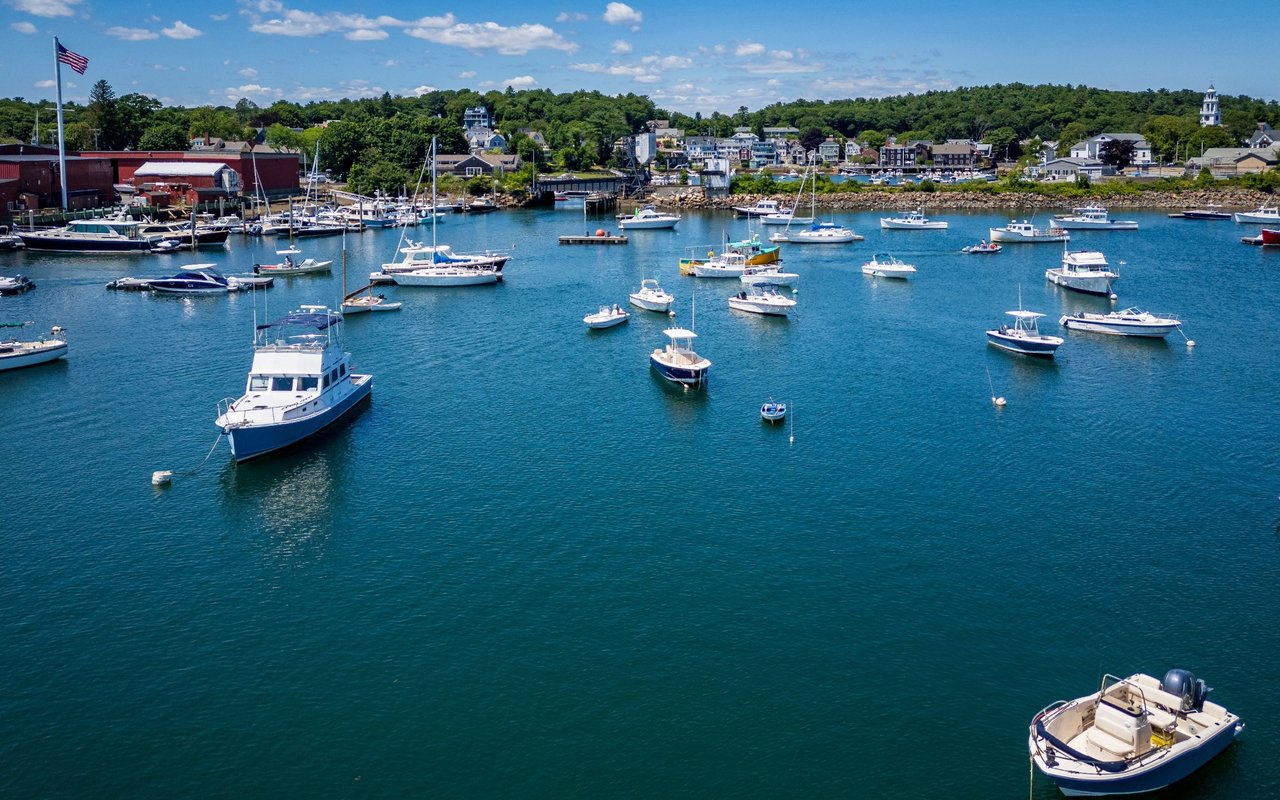
Swampscott is 6.7 square miles, small enough to feel like a single community when you're walking it and large enough to contain three genuinely different housing products once you start comparing sale prices.
There's the waterfront tier: Eisman's Beach, Phillips Beach, Littles Point, Galloupes Point. These are the streets where a listing can run into eight figures and where price per square foot reflects water frontage and privacy as much as finished square footage. There's the walkable in-town corridor around Humphrey Street, where condos and smaller homes trade at a premium for proximity to the commuter rail, the shops, and the beach without actually being waterfront. And there are the inland neighborhoods, places like Olmsted near Vinnin Square, where the housing stock is older, lots are smaller, and the commute to a train platform is a car ride rather than a walk.
Recent closed sales make the gap concrete. A two-bedroom condo on Humphrey Street sold in April 2026 at $865 per square foot after a single day on market. A four-bedroom on Ocean Avenue closed in June 2026 at $777 per square foot, though it took 35 days and sold 13 percent under its original list price. Move inland and the numbers change shape entirely: a three-bedroom on Alden Road sold in February 2026 at $502 per square foot in just three days, and a home on Prospect Street closed the summer before at $378 per square foot after 37 days on market.
| Sale | Type of Location | Price per Sq Ft | Days on Market |
|---|---|---|---|
| Humphrey St condo (Apr 2026) | Walkable downtown corridor | $865 | 1 |
| Ocean Ave single-family (Jun 2026) | Waterfront-adjacent | $777 | 35 |
| Alden Rd single-family (Feb 2026) | Inland neighborhood | $502 | 3 |
| Prospect St single-family (2025) | Inland neighborhood | $378 | 37 |
That's more than a two-to-one spread in price per square foot inside a single town, and it's not random. It maps directly to which of Swampscott's three sub-markets a property sits in. A buyer anchoring their expectations to a single median list price, whether it's the roughly $897,000 figure that active listings showed as of late July 2026 or the $799,522 median sale price Redfin reported for a rolling window through May 2026, is really anchoring to an average of three different products. The question that actually predicts what you'll pay isn't "what does Swampscott cost." It's "which Swampscott am I shopping in."
Why the Menu Never Gets Longer
The other number worth sitting with has nothing to do with price. It's how few homes are ever actually for sale.
As of early spring 2026, one local tally counted just 15 properties on the market in the entire town, a figure that was expected to grow only modestly as the traditional spring listing season arrived. By late July, an active-listings snapshot showed 32 properties on the market. A separate pull in early August counted 54. Three credible sources, three different counts, taken weeks apart. That's not sloppy data. It's a market small enough that even minor differences in geographic boundaries or listing categories move the count by double digits.
The deeper reason inventory stays thin isn't weak seller motivation. It's how long people stay once they buy. According to ATTOM's fourth-quarter 2025 homeownership tenure report, the average Massachusetts homeowner stays in their home for about 13.3 years, compared with 8.6 years nationally. That's nearly five extra years per household before a property even has a chance to come back on the market. Multiply that across thousands of Swampscott households and you get a structural explanation for why buyers feel like they're choosing from a small menu even in years when demand is strong: the supply side simply doesn't refresh on the same clock as demand does.
This matters for strategy, not just curiosity. If low inventory were a temporary symptom of a slow seller mood, a buyer could reasonably wait it out. But if it's structural, tied to how long Massachusetts households stay put, waiting for the market to "open up" is a bet against a trend that has held for years. The more productive move is figuring out which of Swampscott's three sub-markets fits the budget and the life stage, and being ready to act the moment something in that specific slice comes up, because it may not come up again for a while.
What This Actually Means If You're Comparing Towns
If you're cross-shopping Swampscott against Marblehead, Salem, or another North Shore town using median price alone, you're comparing an average of three different housing products against whatever mix the other town happens to have. That's not a comparison, it's a coincidence. The more useful exercise is to decide first whether you're looking for walkable in-town living, water proximity, or a larger inland lot with an easier price per square foot, and then compare towns within that specific category.
Swampscott's numbers aren't wrong. They're just describing a town that, statistically speaking, doesn't exist as a single market. It exists as three, wearing one zip code.
If you're trying to figure out which of those three fits what you're actually looking for, and what a realistic number looks like for that specific slice of Swampscott, that's exactly the kind of question a local conversation answers faster than another afternoon of scrolling listings. North Shore and More works this market street by street, not just town by town. Get a Free North Shore Market Consultation and we'll walk through which part of Swampscott, or which North Shore town entirely, actually matches your budget and your list.