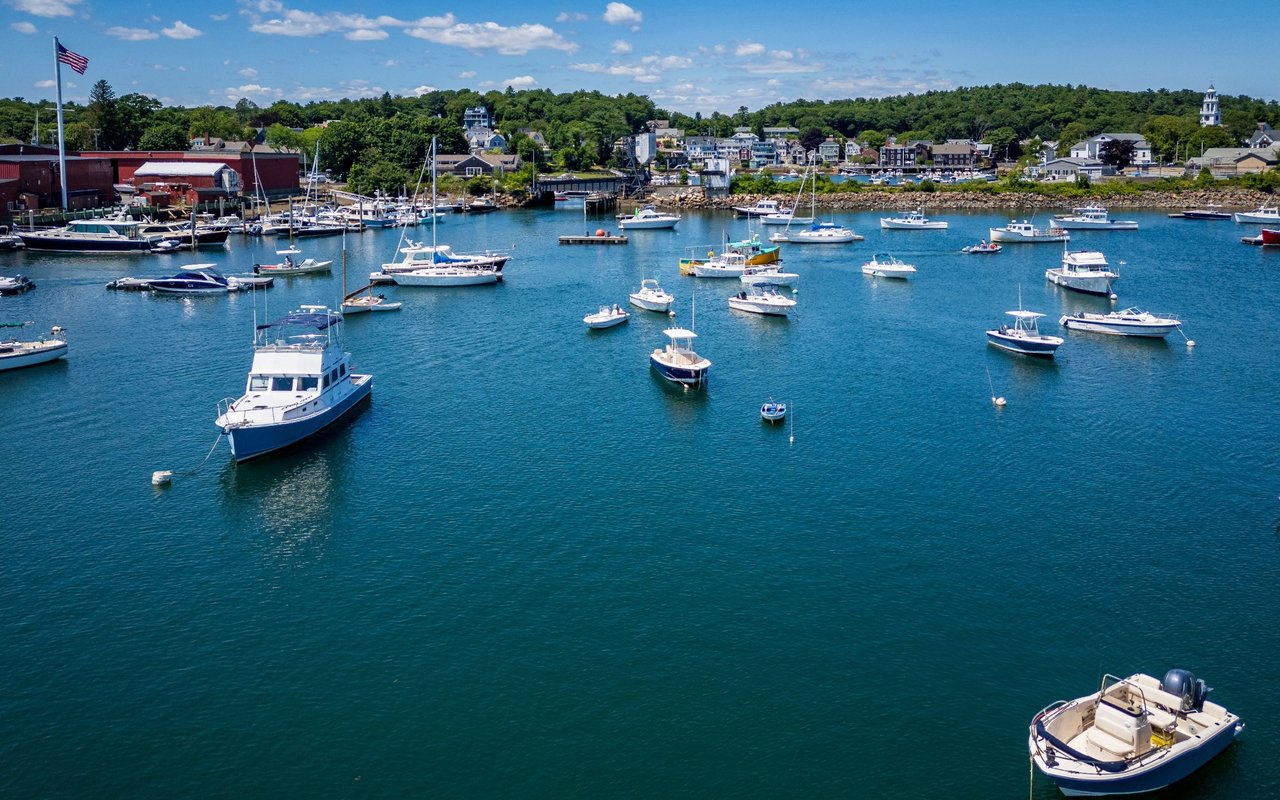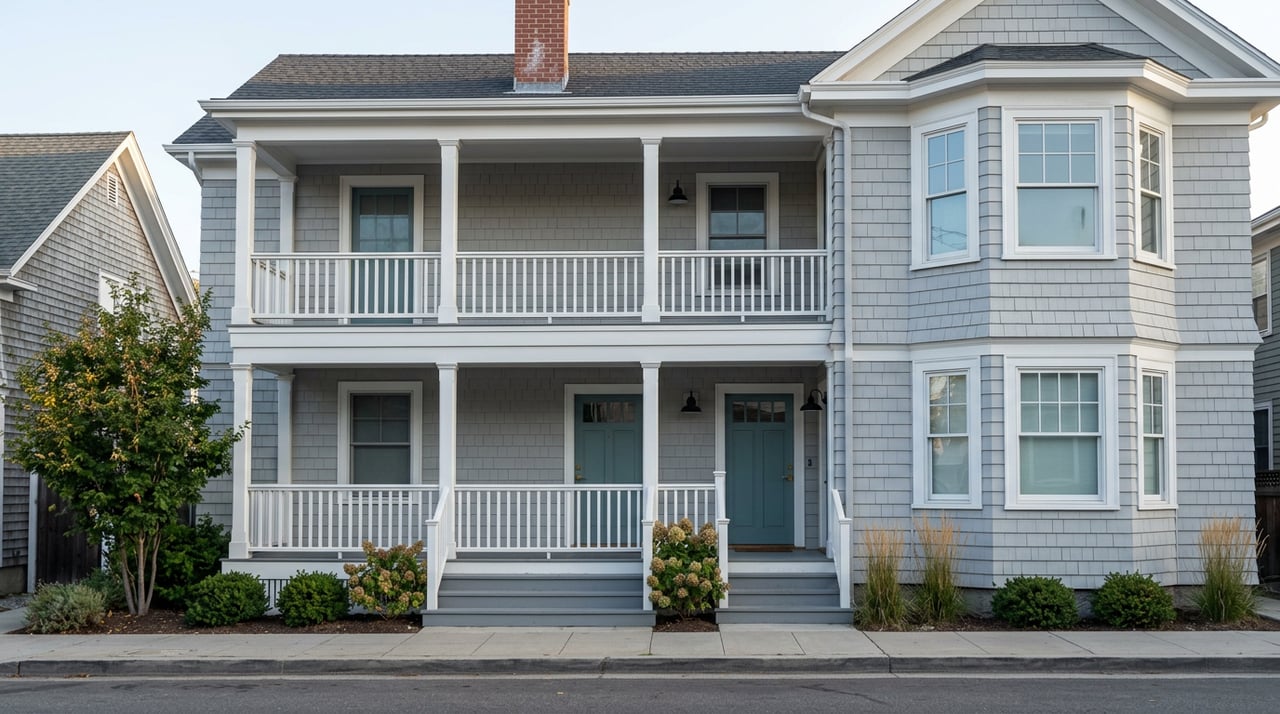
Say you're touring an occupied two-family near downtown Salem. The seller mentions the tenants are month-to-month, the rent rolls are clean, and the unit mix would split nicely into two condos. You start running numbers assuming a six-to-nine month turn: buy, notice the tenants, renovate, list. That timeline was realistic as recently as 2024. It isn't anymore, and the reason has nothing to do with construction costs or interest rates. It's a city ordinance that closed a loophole investors had been using for decades.
Here's the loophole. Massachusetts passed a statewide condominium conversion law back in 1983, but that law only ever applied to buildings with four or more units. Anything smaller, meaning the two- and three-family homes that make up so much of Salem's housing stock, sat outside its reach entirely. No notice requirements, no tenant purchase rights, no relocation obligations. If you wanted to convert rental units to condos with minimal friction, the two- and three-family building wasn't just an option. It was the obvious play, because it was the one size the law didn't touch.
The results show up in the city's own numbers. Between 2016 and 2024, Salem recorded more than 530 rental units converted into condominiums. Of those, 78 percent were in two- and three-family properties, according to the city's tenant protection office. That's not a coincidence of taste. It's what happens when a regulatory gap sits next to a hot housing market and investors do the math.
Why Salem Closed the Gap
The city needed permission from the state legislature to regulate building sizes the 1983 law didn't cover, since municipalities can't unilaterally expand a state statute's reach. Salem filed a Home Rule Petition for exactly that authority, and the legislature and governor approved it in 2024. That cleared the way for the City Council to pass a local Condominium Conversion Ordinance, which it did on July 17, 2025. The permitting system built to enforce it, run through the city's Housing Stability Coordinator, went live in the fall of 2025.
Mayor Dominick Pangallo framed the goal plainly when the ordinance passed: "This ordinance is about balance." The city isn't trying to stop conversions. It's trying to make sure the building type that absorbed nearly four out of five conversions over the past eight years now carries the same obligations that four-plus unit buildings already had.
What Actually Changed
For any owner of a two-or-more unit building who intends to convert to condo or cooperative ownership, the process now looks like this:
| Requirement | Before July 2025 | Under the Ordinance |
|---|---|---|
| Tenant notice | Not required for 2-3 family buildings | Minimum two years before conversion |
| City permits | None | Conditional Conversion Permit and Final Conversion Permit, $600 per unit total |
| Tenant purchase rights | None | First right of refusal to buy the converted unit |
| Relocation payment if tenant doesn't buy | None | $6,000 per unit, or $8,000 for older adults, tenants with disabilities, or low- and moderate-income households |
| Tenant's early-exit option | Standard lease terms | Right to terminate with 30 days' notice, no penalty |
The two-year notice period is the number that changes the underwriting model most. It doesn't start when you close on the property. It starts the day you notify tenants of your intent to convert, which means the clock and the carrying costs both begin well before you can market a single unit for sale. Add $600 per unit in permit fees, plus a potential $6,000 to $8,000 relocation payment if the tenant declines to buy, and the fast-turn conversion model that built a third of Salem's recent condo supply no longer exists in its old form.
What This Means Depending on What You're Buying
If you're eyeing an occupied two- or three-family with conversion in mind, you're now underwriting a genuine multi-year hold, not a flip. The two-year notice period plus renovation and sale timeline pushes most projects past the 30-month mark before you see proceeds. That's a fundamentally different capital structure than the buy-notice-renovate-sell-in-under-a-year model that produced most of the 530-plus conversions since 2016. It still works. It just requires patient capital and a return model built around a longer hold, not a quick exit.
If you're looking at a vacant multi-family, or one where the seller has already completed the notice period and holds an active permit, most of that friction disappears. There's no tenant to notify, no relocation payment to budget, and no two-year clock to start. Expect vacant or already-permitted 2-3 family listings to command more buyer attention relative to occupied ones carrying the same asking price, simply because the regulatory runway is shorter.
If you're comparing an occupied conversion project against an already-converted condo unit, the calculus shifts even more. Salem added roughly 530 condo units through conversion over eight years, and that pipeline just got materially slower. Fewer new units means the existing supply of converted condos, the kind you'll find listed today in neighborhoods like South Salem and near downtown, sits in a market with less incoming competition than it had a year ago.
Where the Broader Market Sits Right Now
None of this happens in isolation from Salem's overall market conditions. Over the three months ending in June 2026, Salem's median sale price ran around $615,000, up about 2.4 percent from the same period a year earlier. Supply stayed tight through the spring, with the city sitting near 1.5 months of inventory as of March 2026, well under the six-month mark that typically signals a balanced market. Multi-family listings citywide carried a median asking price near $989,000 as of September 2026.
Rents have held firm too, with typical asking rents in Salem running roughly $2,650 to $2,770 a month as of mid-2026. That rent level is part of why the buy-a-two-family-collect-rent-then-convert model penciled in the first place. Steady rental income covered the carrying costs while an investor worked through renovation and sale. The ordinance doesn't change that income potential. It changes how long you need to plan on collecting it before a conversion project reaches the finish line.
The Practical Takeaway
The multi-family investment case in Salem hasn't weakened. What's changed is the due diligence question every buyer now needs to ask before writing an offer on an occupied two- or three-family: has the current owner already started the notice period, and if not, are you prepared to underwrite a two-year clock plus renovation and sale time before you see a return. That single question now separates a conversion project that pencils from one that doesn't.
A Few Questions Worth Settling Before You Offer
Does this apply to buildings with four or more units too? Buildings with four-plus units were already covered under the 1983 state law, which required similar tenant protections. Salem's local ordinance specifically closes the gap for two- and three-family properties, which the state law never touched.
What if the property is vacant when I buy it? An owner still needs to secure the Conditional and Final Conversion Permits before converting, but there's no tenant to notify or compensate, since the notice period and relocation requirements are tied to units that were occupied when the owner filed intent to convert.
Can I still buy a two- or three-family in Salem and just rent it out? Yes. The ordinance only applies when an owner intends to convert the property to condominium or cooperative ownership. Buildings kept as long-term rentals aren't affected.
If you're weighing a Salem multi-family with conversion potential, or trying to figure out whether an already-converted unit makes more sense given the current pipeline, North Shore and More works through these numbers with investors regularly. Get a Free North Shore Market Consultation before you write an offer, so the timeline you're underwriting matches the one the city actually enforces.